The Royal Game of Ur
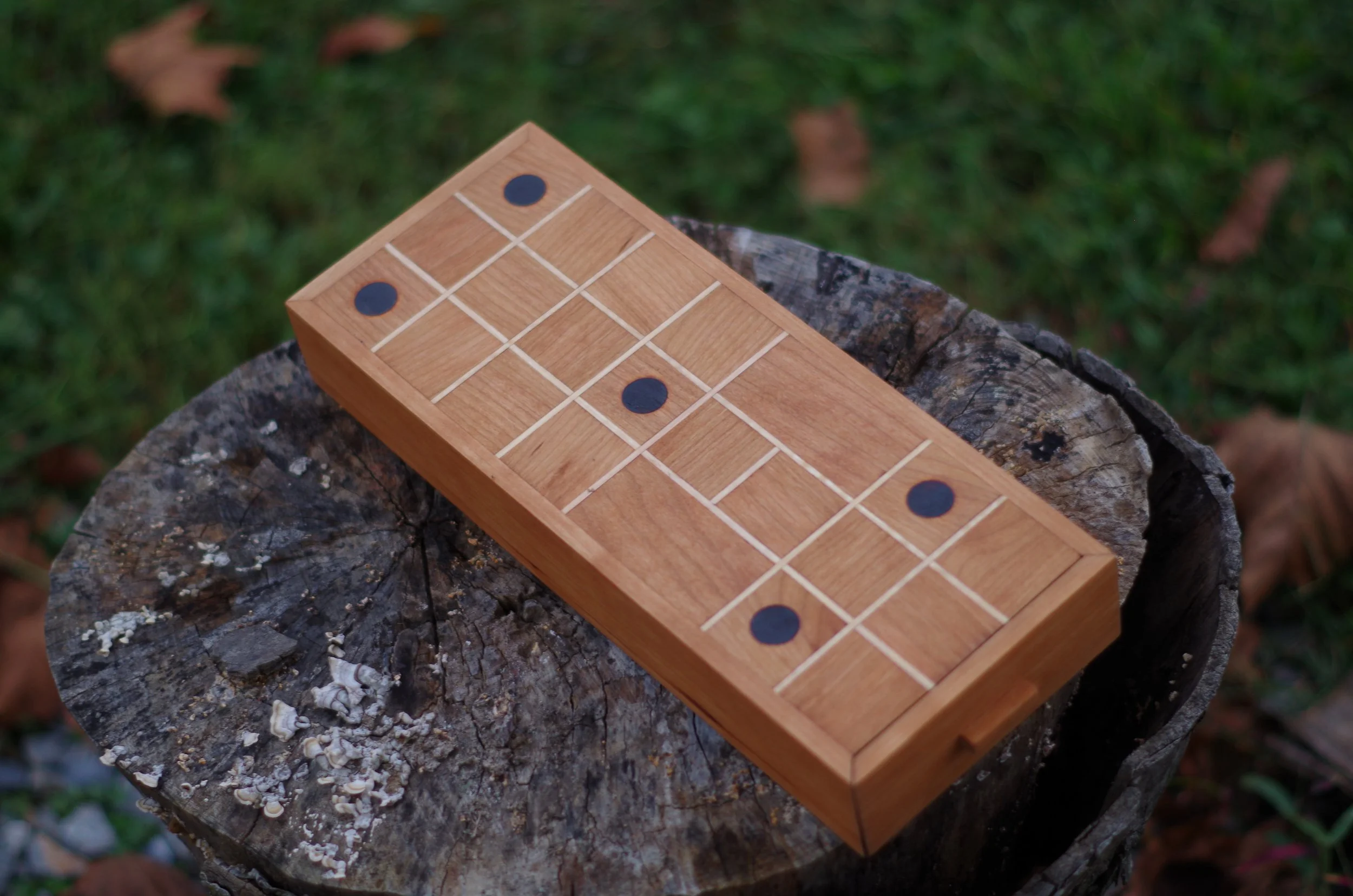
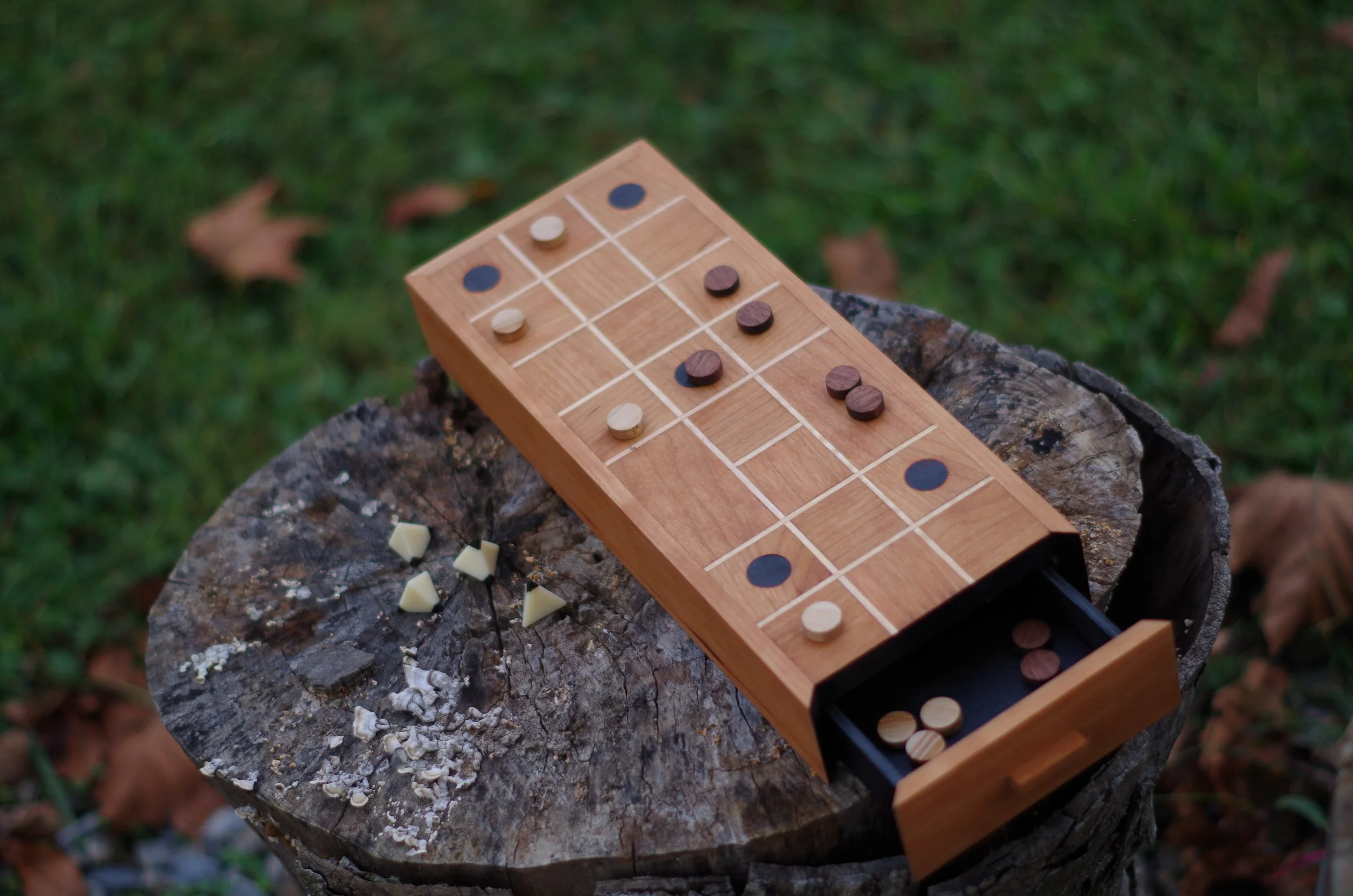
The Royal Game of Ur board shown here is hand crafted from cherry and maple, with smooth inlays and a warm, contrasting finish; the game pieces are carved from sycamore and walnut, and a built-in drawer neatly stores the pieces and dice when not in use.
The Royal Game of Ur is one of the oldest known board games, originating in ancient Mesopotamia around 2600–2400 BCE. Archaeological finds from the Royal Cemetery at Ur include boards and pieces, and variations of the game spread across the ancient Near East. Modern reconstructions are based on those discoveries and on later references, combining elements of strategy and chance that made the game popular for millennia.
How to play: each player controls a set of pieces and takes turns rolling a small set of dice to determine movement. Pieces travel along a designated path on the board; landing on an opponent’s piece typically sends that piece back to its start. Certain squares grant safe passage or bonus moves. The objective is to move all your pieces along the path and off the board before your opponent does. Exact rules can vary by reconstruction, so consult the included guide for the version implemented on this handcrafted set.